Top Posts & Pages
Recent Posts
My Book

Pro .NET Best Practices
Stephen Ritchie's offerings of ruthlessly helpful software engineering practices.
In previous posts, I discussed the concept of “ruthlessly helpful” practices, which are those that are practical, valuable, widely accepted, and provide clear archetypes to follow. Today, I want to apply this framework to one of the most significant developments in software engineering that have happened since I wrote “Pro .NET Best Practices”: platform engineering.
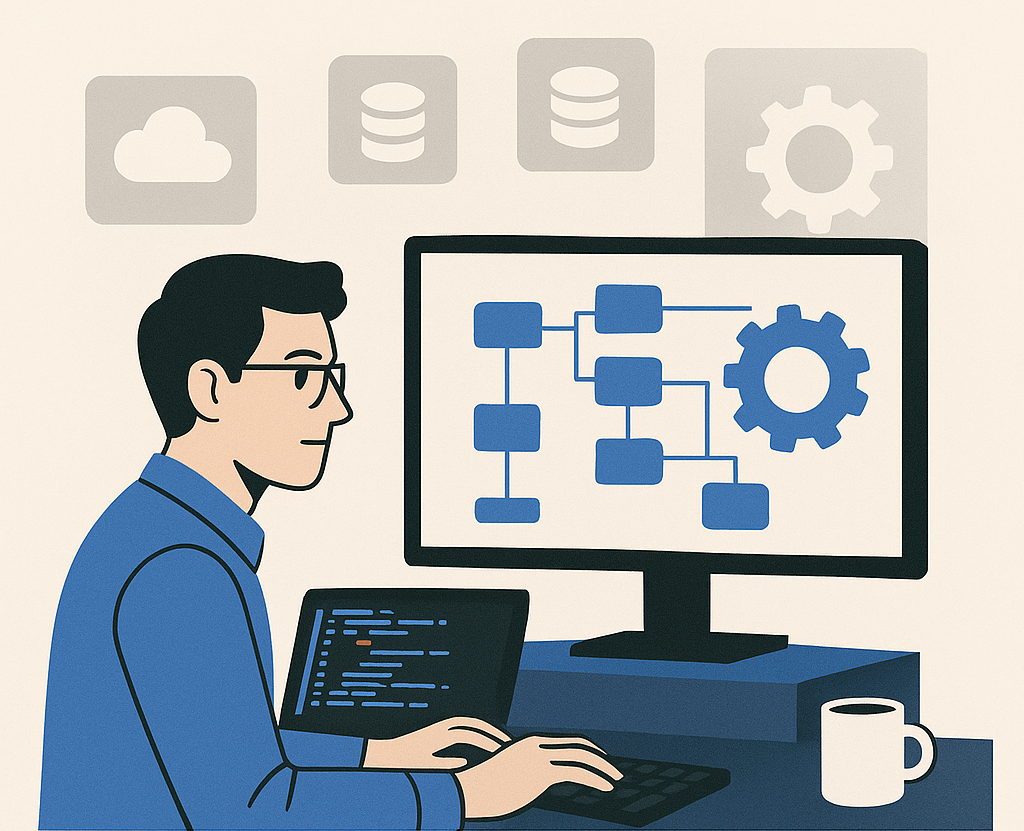
If you’re unfamiliar with the term, platform engineering is the practice of building and maintaining internal developer platforms that provide self-service capabilities and reduce cognitive load for development teams. Think of it as the evolution of DevOps, focused specifically on developer experience and productivity.
But before you dismiss this as another industry buzzword, let me walk through why platform engineering might be the most ruthlessly helpful practice your organization can adopt in 2025.
Modern software development requires an overwhelming array of tools, services, and configurations. Check out Curtis Collicutt’s The Numerous Pains of Programming.
A typical application today might need:
The list goes on. Each tool solves important problems, but the cognitive load of managing them all is crushing development teams. I regularly encounter developers who spend more time configuring tools than writing business logic.
This isn’t a tools problem. This is a systems problem. Individual developers shouldn’t need to become experts in Kubernetes networking or Terraform state management to deploy a web application. That’s where platform engineering comes in.
Platform engineering creates an abstraction layer between developers and the underlying infrastructure complexity. Instead of each team figuring out how to deploy applications, manage databases, or set up monitoring, the platform team provides standardized, self-service capabilities.
A well-designed internal developer platform (IDP) might offer:
The goal isn’t to eliminate flexibility—it’s to make the common cases easy and the complex cases possible.
Let’s apply our four criteria to see if platform engineering deserves your team’s attention and investment.
Platform engineering is most practicable for organizations with:
If you’re a small team with simple deployment needs, platform engineering might be overkill. But if you have multiple teams repeatedly solving the same infrastructure problems, it becomes highly practical.
Implementation Reality Check: Start small. You don’t need a comprehensive platform on day one. Begin with the most painful, repetitive task your teams face (often deployment or environment management) and build from there.
Platform engineering has moved well beyond the experimentation phase. Major organizations like Netflix, Spotify, Google, and Microsoft have demonstrated significant value from platform investments. The practice has enough adoption that:
More importantly, platform engineering builds on established practices. Particularly, practices aligned to the principles of automation, standardization, and reducing manual, error-prone processes.
Platform engineering addresses several measurable problems:
Developer Productivity: Teams report 20-40% improvements in deployment frequency and reduced time to productivity for new developers.
Cognitive Load Reduction: Developers can focus on business logic rather than infrastructure complexity.
Consistency and Reliability: Standardized platforms reduce environment-specific issues and improve overall system reliability.
Security and Compliance: Centralized platforms make it easier to implement and maintain security policies and compliance requirements.
Cost Optimization: Shared infrastructure and automated resource management typically reduce cloud costs.
The key is measuring these benefits in your specific context. Platform engineering is valuable when the cost of building and maintaining the platform is less than the productivity gains across all development teams.
Yes, with important caveats. The platform engineering community has produced excellent resources:
However, every organization’s platform needs are somewhat unique. The examples provide direction, but you’ll need to adapt them to your specific technology stack, team structure, and business requirements.
Platform engineering reminds me of continuous integration adoption patterns from the early 2000s. Teams that succeeded with CI followed a predictable pattern:
Platform engineering follows similar patterns. Here’s a practical approach:
Survey your development teams to identify their most time-consuming, repetitive infrastructure tasks. Common starting points:
Choose one area and build a simple, self-service solution. Success here creates momentum for broader platform adoption.
Once you have a working solution for one problem:
Use the success and lessons from Phase 1 to justify investment in additional platform capabilities. Prioritize based on team feedback and measurable impact.
Platform engineering doesn’t require hiring a specialized team immediately. Start with existing engineers who understand your infrastructure challenges. Many successful platforms begin as side projects that demonstrate value before becoming formal initiatives.
This is actually an argument for platform engineering, not against it. Provide standardized capabilities while allowing teams to use their preferred development tools on top of the platform.
Calculate the total cost of infrastructure complexity across all your teams. Include developer time spent on deployment issues, environment setup, and tool maintenance. Most organizations discover they’re already paying for platform engineering, but they’re just doing it inefficiently across multiple teams.
Measure platform engineering impact across three dimensions:
If platform engineering seems like a ruthlessly helpful practice for your organization:
Remember, the goal isn’t to build the most sophisticated platform. The goal is to build the platform that most effectively serves your teams and the business’ needs.
When I wrote about build automation in “Pro .NET Best Practices,” I focused on eliminating manual, error-prone processes that slowed teams down. Platform engineering is the natural evolution of that thinking, applied to the entire development workflow rather than just the build process.
What’s fascinating to me is how platform engineering validates many of the strategic principles from my book. The most successful platform teams think like product teams. Platform teams understand their customers (developers), measure satisfaction and adoption, and iterate based on feedback. They focus on removing friction and enabling teams to be more effective, rather than just implementing the latest technology.
The biggest lesson I’ve learned watching organizations adopt platform engineering is that culture matters as much as technology. Platforms succeed when they’re built with developers, not for developers. The most effective platform teams spend significant time understanding developer workflows, pain points, and preferences before building solutions.
This mirrors what I observed with continuous integration adoption: technical excellence without organizational buy-in leads to unused capabilities and wasted investment. The teams that succeed with platform engineering treat it as both a technical and organizational transformation.
Looking ahead, I believe platform engineering is (or will become) as fundamental to software development as version control or automated testing. The organizations that master it early will have a significant competitive advantage in attracting talent and delivering software efficiently. Those that ignore it will find themselves increasingly hampered by infrastructure complexity as the software landscape continues to evolve.
Is your organization considering platform engineering? What infrastructure challenges are slowing down your development teams? Share your experiences and questions in the comments below.
Pro .NET Best Practices
 Ruthlessly Helpful