Top Posts & Pages
Recent Posts
My Book
Pro .NET Best Practices
Stephen Ritchie's offerings of ruthlessly helpful software engineering practices.
When I titled my book Pro .NET Best Practices back in 2011, I wrestled with that word “best.” It’s a superlative that suggests there’s nothing better, no room for discussion, and no consideration of context. Over the years, I’ve watched teams struggle not because they lacked good practices, but because they blindly adopted “best practices” that weren’t right for their situation.
Today, as development teams face an overwhelming array of tools, frameworks, and methodologies, this challenge has only intensified. The industry produces new “best practices” faster than teams can evaluate them, let alone implement them effectively. It’s time we moved beyond the cult of “best” and embraced something more practical: being ruthlessly helpful.
The software development industry loves superlatives. We have “best practices,” “cutting-edge frameworks,” and “industry-leading tools.” But here’s what I’ve learned from working with hundreds of development teams: the practice that transforms one team might completely derail another.
Consider continuous deployment—often touted as a “best practice” for modern development teams. For a team with mature automated testing, strong monitoring, and a culture of shared responsibility, continuous deployment can be transformative. But for a team still struggling with manual testing processes and unclear deployment procedures, jumping straight to continuous deployment is like trying to run before learning to walk.
The problem isn’t with the practice itself. The problem is treating any practice as universally “best” without considering context, readiness, and specific team needs.
Instead of asking “What are the best practices?” we should ask “What practices would be ruthlessly helpful for our team right now?” This shift in thinking changes everything about how we evaluate and adopt new approaches.
A ruthlessly helpful practice must meet four criteria:
The practice must be something your team can actually implement given your current constraints, skills, and organizational context. This isn’t about lowering standards—it’s about being honest about what’s achievable.
A startup with three developers has different constraints than an enterprise team with fifty. A team transitioning from waterfall to agile has different needs than one that’s been practicing DevOps for years. The most elegant practice in the world is useless if your team can’t realistically adopt it.
While innovation has its place, most teams benefit from practices that have been proven in real-world environments. Generally accepted practices come with community support, documentation, tools, and examples of both success and failure.
This doesn’t mean chasing every trend. It means choosing practices that have demonstrated value across multiple organizations and contexts, with enough adoption that you can find resources, training, and peer support.
A ruthlessly helpful practice must address actual problems your team faces, not theoretical issues or problems you think you might have someday. The value should be measurable and connected to outcomes that matter to your stakeholders.
If your team’s biggest challenge is deployment reliability, adopting a new code review tool might be a good practice, but it’s not ruthlessly helpful right now. Focus on practices that move the needle on your most pressing challenges.
The practice should come with concrete examples and implementation patterns that your team can follow. Abstract principles are useful for understanding, but teams need specific guidance to implement practices successfully.
Look for practices that include not just the “what” and “why,” but the “how”—with code examples, tool configurations, and step-by-step implementation guidance.
Let’s apply this framework to a practice many teams are considering today: AI-assisted development with tools like GitHub Copilot.
Is it Practicable? For most development teams in 2025, yes. The tools are accessible, integrate with existing workflows, and don’t require massive infrastructure changes. However, teams need basic proficiency with their existing development tools and some familiarity with code review practices.
Is it Generally Accepted? Increasingly, yes. Major organizations are adopting AI assistance, there’s growing community knowledge, and the tools are becoming standard in many development environments. We’re past the experimental phase for basic AI assistance.
Is it Valuable? This depends entirely on your context. If your team spends significant time on boilerplate code, routine testing, or documentation, AI assistance can provide measurable value. If your primary challenges are architectural decisions or complex domain logic, the value may be limited.
Is it Archetypal? Yes, with caveats. There are clear patterns for effective AI tool usage, but teams need to develop their own guidelines for code review, quality assurance, and skill development in an AI-assisted environment.
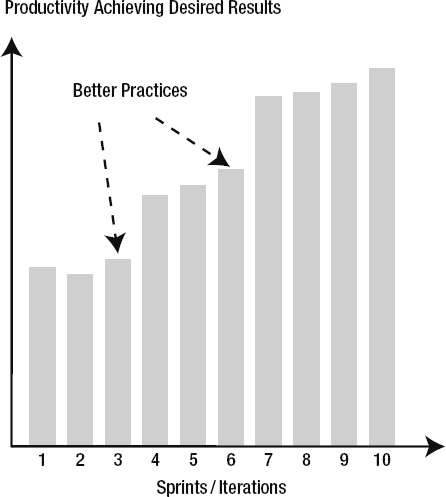
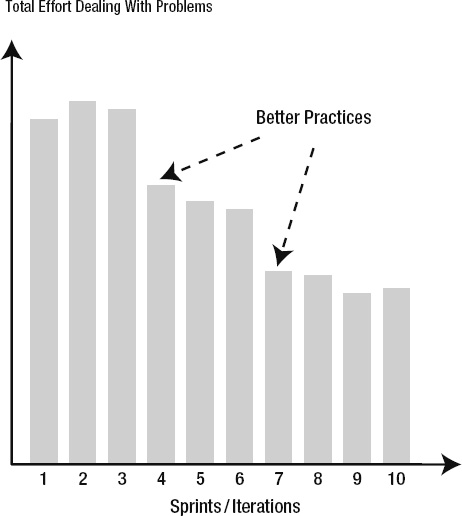
For many teams today, AI-assisted development meets the criteria for a ruthlessly helpful practice. But notice how the evaluation depends on team context, current challenges, and implementation readiness.
Even when a practice meets all four criteria, teams often struggle with adoption. Here are the most common obstacles I’ve observed:
Teams often try to implement practices perfectly from day one. This leads to overwhelm and abandonment when reality doesn’t match expectations.
Solution: Embrace incremental adoption. Start with the simplest, highest-value aspects of a practice and build competency over time. Perfect implementation is the enemy of practical progress.
Many teams choose tools before understanding the practice, leading to solutions that don’t fit their actual needs.
Solution: Understand the practice principles first, then evaluate tools against your specific requirements. The best tool is the one that fits your team’s context and constraints.
Technical practices often require cultural changes that teams underestimate or ignore entirely.
Solution: Address cultural and process changes explicitly. Plan for training, communication, and gradual behavior change alongside technical implementation.
One of the most important aspects of adopting new practices is measuring their impact. Here’s how to approach measurement for ruthlessly helpful practices:
Take inventory of your current development practices using the ruthlessly helpful framework:
Remember, the goal isn’t to adopt the most practices or the most advanced practices. The goal is to adopt practices that make your team more effective at delivering value.
Fourteen years after writing Pro .NET Best Practices, I’m more convinced than ever that context matters more than consensus when it comes to development practices. The “best practice” approach encourages cargo cult programming—teams adopting practices because they worked somewhere else, without understanding why or whether they fit the current situation.
The ruthlessly helpful framework isn’t just about practice selection—it’s about developing judgment. Teams that learn to evaluate practices systematically become better at adapting to change, making strategic decisions, and avoiding the latest hype cycles.
What’s changed since 2011 is the velocity of change in our industry. New frameworks, tools, and practices emerge constantly. The teams that thrive aren’t necessarily those with the best individual practices—they’re the teams that can quickly and accurately evaluate what’s worth adopting and what’s worth ignoring.
The irony is that by being more selective and contextual about practice adoption, teams often end up with better practices overall. They invest their limited time and energy in changes that actually move the needle, rather than spreading themselves thin across the latest trends.
The most successful teams I work with today have learned to be ruthlessly helpful to themselves—choosing practices that fit their context, solve their problems, and provide clear paths to implementation. It’s a more humble approach than chasing “best practices,” but it’s also more effective.
What practices is your team considering? How do they measure against the ruthlessly helpful criteria? Share your thoughts and experiences in the comments below.
Pro .NET Best Practices
 Ruthlessly Helpful